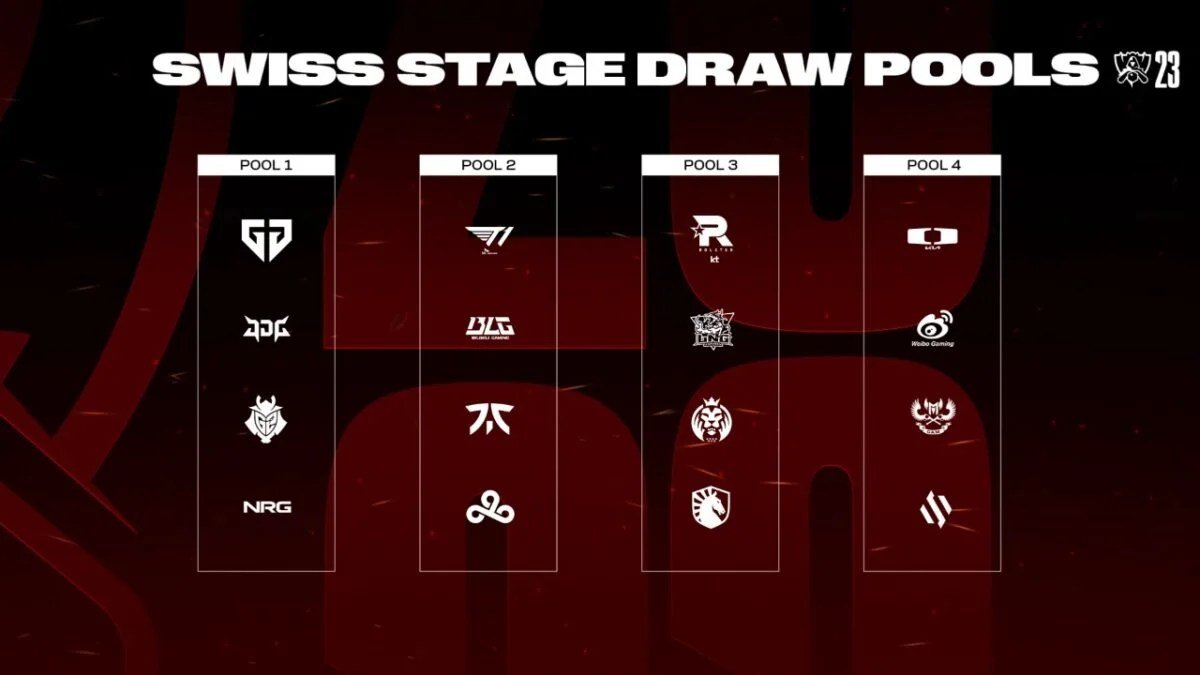
The League of Legends World Championship is a proving ground, and one of its most interesting phases is the league swiss stage. It's where the field truly narrows, as sixteen teams battle it out using a unique format designed to reward consistent performance without the sudden death of single-elimination. This year, the 2024 League of Legends World Championship Swiss Stage takes place across Europe, culminating with the grand finals at London's O2 Arena.
At a Glance:
- The Swiss Stage is a multi-round tournament format where teams are paired based on their win-loss record.
- 16 teams compete for a spot in the Knockout Stage.
- Teams need 3 wins to advance and are eliminated after 3 losses.
- Advancement and elimination matches are best-of-three (Bo3), while all others are best-of-one (Bo1).
- The system rewards consistent play and avoids pitting top teams against each other early on.
What is a Swiss-System Tournament?
Before diving into the League of Legends interpretation, let's understand the foundation: the Swiss-system tournament. In essence, it's a competition format designed to efficiently rank a large number of competitors. Imagine trying to run a round-robin tournament with hundreds of participants; it would take forever. The Swiss system offers a practical alternative.
The core idea is that teams should play opponents with similar records, ensuring that everyone gets a fair shot at proving their skill. This pairing happens round by round, based on the results of previous matches. The winner is determined by total points accumulated over a fixed number of rounds.
Key Features of the Swiss System:
- Fixed Rounds: A predetermined number of rounds are played.
- Cumulative Scores: Pairing in later rounds is based on the accumulated scores of the teams.
- Elimination of Repeat Matchups: Teams will never face the same opponent twice.
- Tie-Breaking: Methods such as the Buchholz system are used to break ties (summing the scores of a player's opponents).
- Initial Pairing: In the first round, pairings can be random or follow a seeded pattern to separate top-ranked players.
Why Use a Swiss System?
The Swiss system offers some key advantages for tournaments, especially those with many participants. It allows for a clear winner to be determined without eliminating participants early. The final ranking provides a pretty solid indication of the relative strength of all teams involved, and everyone gets a chance to play in every round. The Swiss stage is a great opportunity to gauge team performances and Understanding the Swiss Stage Bracket.
The League Swiss Stage: Worlds Edition
Now, let's zoom in on how the Swiss system is used at the League of Legends World Championship. Sixteen teams, a mix of those who earned direct entry from major regions like China, South Korea, Europe, and North America, and those who battled through the Play-In Stage, enter the fray.
The entire stage is about securing three wins before suffering three losses. Three wins punches your ticket to the Knockout Stage. Three losses, and you're out. The twist? Not all matches are created equal.
The Match Format: Bo1 vs. Bo3
Most matches during the league swiss stage are best-of-one (Bo1). This means a single game determines the winner. This format is known for its volatility, where upsets can and often do occur. A bad draft, a single misplay, or even just a pocket pick from the underdog can swing the entire game.
However, the elimination and advancement matches are best-of-three (Bo3). This provides a larger sample size and generally favors the stronger team. It allows for adaptation, counter-strategies, and a more accurate reflection of overall skill.
Side Selection: A Subtle Advantage
Side selection, often overlooked, can provide a slight edge. Some teams have a preference for playing on the blue or red side, due to champion select advantages, warding opportunities, or preferred early-game strategies.
In the league swiss stage, side selection for the first game is determined by the initial draw pool. If teams are from the same draw pool, drawing order determines the side selection. In subsequent games of a Bo3, the losing team from the previous game gets to choose their side.
How the Swiss Stage Works, Round by Round
The league swiss stage unfolds over five rounds, each with its own set of challenges and strategic considerations.
- Round 1: Teams are randomly matched against opponents from different regions. This is often seen as a feeling-out round, where teams get their first taste of international competition. The regional differences in playstyle start to become apparent.
- Rounds 2-5: This is where the Swiss system truly kicks in. Teams are seeded and paired based on their win-loss record. Teams with a 1-0 record face other 1-0 teams, 0-1 teams face other 0-1 teams, and so on. The goal is to match teams of similar strength, creating increasingly competitive matchups. Teams can never play the same opponent twice. This rule is crucial to the fairness of the system.
- Advancement & Elimination: As teams reach three wins, they advance to the Knockout Stage. As they accumulate three losses, they are eliminated from the tournament.
Swiss System Variations
While the core principles remain the same, Swiss-system tournaments can have variations. Here's a quick glance at some related systems:
- Dutch System: Players are divided into score groups, then ranked by rating. The top half of each group is paired with the bottom half, with modifications.
- Monrad System: Players are ranked by score and starting number, paired #1 vs #2, #3 vs #4, etc..
- Accelerated Pairings (Accelerated Swiss): Top players pair more quickly in opening rounds.
- Danish System: Similar to Monrad, but allows repeat matchups.
- Grand Prix System: Player's score based on best results over a long period.
- McMahon System: Players have an initial skill ranking that determines initial pairing.
- Amalfi System: Players are listed for decreasing score/rating.
- Keizer System: Seeks to pair opponents of similar playing strength and allows players to enter/leave the tournament.
Swiss Stage: Advantages and Disadvantages
Like any tournament format, the league swiss stage has its pros and cons.
Advantages:
- Fairness: The system ensures that teams are consistently matched against similarly performing opponents.
- Opportunity: Every team gets a chance to prove themselves, even after a loss.
- Reduced Early Upsets: The initial round is seeded to prevent top teams from meeting early, preserving the integrity of the competition.
- Learning Experience: Teams gain valuable experience playing against a variety of opponents from different regions.
Disadvantages: - Complexity: The Swiss system can be difficult for casual viewers to understand.
- Lack of Climax: There isn't a single, decisive final match in the Swiss stage.
- Potential for "Kingmaking": It's possible for a team to indirectly influence who else advances or is eliminated, based on their own results.
Common Misconceptions About the League Swiss Stage
Let's clear up some common misunderstandings:
"The Swiss stage is just random." While the first round involves some randomness, the subsequent rounds are carefully structured to ensure fair pairings based on performance.
"One bad game and you're out." Not true! Teams have to lose three matches to be eliminated. Even a rough start doesn't necessarily spell disaster.
"The Swiss stage is less important than the Knockout Stage." While the Knockout Stage is where the champions are crowned, the Swiss stage is crucial for determining which teams even get a shot at the title. It's a proving ground in its own right.
How to Prepare for the League Swiss Stage (As a Viewer)
Okay, so you want to get the most out of watching the league swiss stage at Worlds? Here's how:
- Understand the Format: Now that you've read this guide, you're already ahead of the game! Make sure you have a grasp on the win/loss progression and the difference between Bo1 and Bo3 matches.
- Know the Teams: Do some research on the participating teams. Look at their regional performance, their key players, and their preferred playstyles.
- Pay Attention to the Meta: The League of Legends meta (the most popular and effective champions, items, and strategies) is constantly evolving. Understanding the current meta will help you appreciate the strategic decisions made by the teams.
- Follow the Experts: There are plenty of analysts and commentators who provide insightful commentary and predictions. Listen to their analysis to deepen your understanding of the games.
- Embrace the Upsets: The Bo1 format is ripe for upsets. Be prepared for unexpected results and enjoy the chaos!
The league swiss stage boils down to consistent performance, adaptability, and a little bit of luck. It's a unique and challenging format that adds a layer of intrigue to the World Championship. So, grab your popcorn, tune in, and get ready to witness some top-tier League of Legends action!